
Low mileage car insurance rewards drivers who travel under 10,000 miles annually with premium discounts typically ranging from 10 percent to 25 percent. Insurers offer these savings through traditional mileage discounts or pay per mile programs that track your actual driving habits using telematics devices or smartphone applications.
Drivers who cut their annual mileage often keep paying a rate set for their old commute, because carriers do not reprice mileage on their own. Most standard policies price premiums based on average driving distances. If your daily routine involves working from home, retirement, or short commutes, you can leverage your reduced time on the road to secure substantial savings on your annual premium.
What Is Low Mileage Car Insurance and How Does It Work?
Low mileage car insurance is not a separate type of policy but rather a pricing adjustment applied to standard auto coverage. Insurers recognize that vehicles spending less time on the road have a statistically lower risk of accidents. Consequently, they pass this reduced risk back to the consumer in the form of lower premiums.
There are two primary ways carriers implement these savings. The first is a traditional low mileage discount, where you simply self report your estimated annual mileage during the quoting process. The second is usage based insurance, which requires you to install a telematics device or download a smartphone application. These programs monitor your actual driving behavior, including total miles driven, hard braking events, and time of day, to calculate your final premium.
Who Qualifies for Low Mileage Discounts?
Eligibility for these discounts depends entirely on your annual driving distance. While thresholds vary by carrier, most insurers define low mileage as driving fewer than 7,500 to 10,000 miles per year. If you are unsure whether you qualify, tracking your odometer for a few months can provide a clear baseline.
The following table outlines typical mileage tiers and the corresponding discount ranges you can expect from major carriers.
| Annual Mileage | Discount Range | Best For |
|---|---|---|
| Under 5,000 | 15 to 25 percent | Retirees, work from home professionals |
| 5,000 to 7,500 | 10 to 20 percent | Remote workers, short commutes |
| 7,500 to 10,000 | 5 to 15 percent | Part time drivers, weekend commuters |
Drivers who fall into the lowest mileage tier often find that combining this discount with other savings strategies is the most effective way to find affordable car insurance to save money over the long term.
Low Mileage vs Pay Per Mile Insurance: Which Saves More?
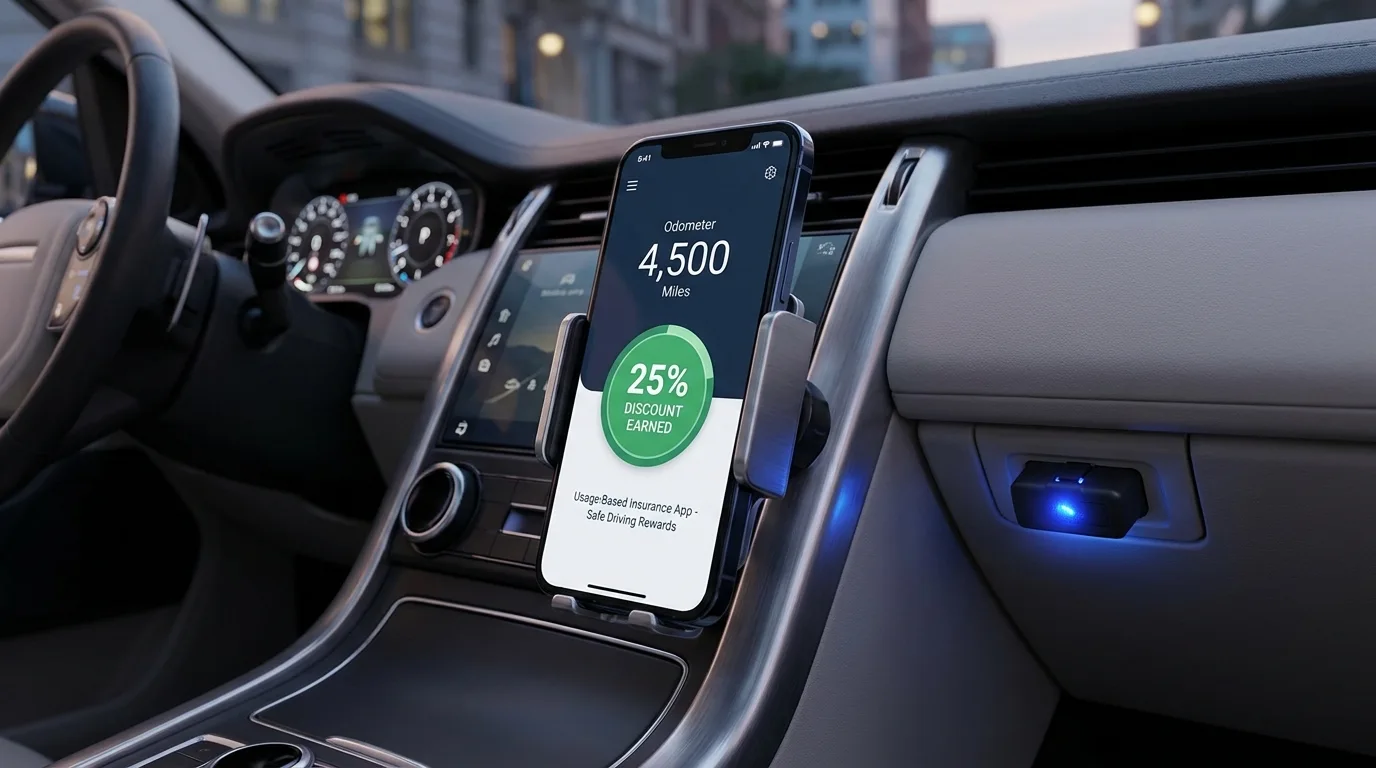
Choosing between a traditional discount and a pay per mile program requires understanding your specific driving habits. A traditional discount offers a simple percentage reduction on your base premium. You receive the savings immediately without installing any tracking equipment. However, you must accurately estimate your mileage, and exceeding that estimate could result in a penalty at renewal.
Pay per mile insurance, conversely, charges a low base rate plus a per mile fee for every mile you drive. If you drive fewer than 5,000 miles annually, a pay per mile program will almost always yield greater savings than a traditional discount. The tradeoff is privacy and consistency. Your driving data is continuously monitored, and your monthly bill will fluctuate based on your actual usage.
For drivers who keep older vehicles and drive very infrequently, combining a pay per mile program with a decision about whether comprehensive car insurance is worth it can result in massive annual reductions.
How to Prove Your Low Mileage to Insurers
Insurers require verification to ensure you actually qualify for the discounted rate. The proof method depends on the type of program you select.
- Odometer Photo Submission: Many traditional discount programs require you to submit a clear photograph of your dashboard odometer at the start of the policy term and again at renewal.
- Telematics Device Enrollment: Usage based programs require you to plug a small device into your onboard diagnostics port or use a smartphone app that tracks location and mileage automatically.
- Annual Mileage Attestation: Some carriers simply require you to sign a statement confirming your estimated driving distance for the upcoming year.
- Professional Inspection: In rare cases involving commercial or high value vehicles, an insurer may request a physical inspection to verify the odometer reading.
When gathering this documentation, it is an excellent opportunity to evaluate your coverage needs. Knowing your exact mileage helps you determine the best time to get car insurance quotes from competing providers who might offer better low mileage incentives.
Common Mistakes That Disqualify You from Low Mileage Savings
Even if you drive very little, simple errors can cause you to lose your discount or face unexpected rate hikes. Avoid these common pitfalls to protect your savings.
- Underestimating actual annual mileage: Guessing too low to secure a better rate is considered misrepresentation. If an audit reveals you drove significantly more than stated, the insurer will retroactively charge the difference.
- Not updating your insurer when driving patterns change: If you start a new job with a long commute or begin driving more frequently, you must notify your carrier. Failing to do so can void your coverage during a claim.
- Failing to requalify at renewal: Mileage thresholds and discount structures change annually. Always verify that your low mileage discount is still applied when your new policy declarations page arrives.
- Choosing the wrong program type: Selecting a pay per mile plan when you actually drive a moderate amount can cost you more than a standard policy with a traditional discount. Always run the math before enrolling.
- Not shopping around for better incentives: Carriers weight mileage differently. If you are loyal to one company, you might be falling for the car insurance loyalty penalty instead of finding a new provider that heavily rewards low mileage drivers.
Frequently Asked Questions
What counts as low mileage for car insurance?
Most major insurance carriers define low mileage as driving fewer than 7,500 to 10,000 miles annually. However, this threshold varies significantly by provider and state. Some companies offer tiered discounts, meaning you receive a larger percentage reduction if you drive under 5,000 miles compared to those driving between 5,000 and 7,500 miles.
How much can I save with a low mileage discount?
Drivers who qualify for low mileage discounts typically see their premiums reduced by 10 percent to 25 percent annually. In some cases, drivers who switch to a dedicated pay per mile program and drive fewer than 5,000 miles can save up to 40 percent compared to a standard policy with average mileage assumptions.
Do I need a tracking device for low mileage insurance?
Not always. Traditional low mileage discounts usually only require you to self report your estimated annual mileage or submit an odometer photo. However, if you enroll in a usage based insurance program or a pay per mile plan, you must install a telematics device or use a smartphone application to track your exact driving distance.
What happens if I exceed my low mileage limit?
Consequences depend on your policy type. With a traditional discount, exceeding your stated mileage limit usually results in a surcharge or the complete removal of the discount at your next renewal. If you are on a pay per mile plan, exceeding your expected mileage simply means you will pay a higher variable rate for those extra miles.
Which insurance companies offer the best low mileage discounts?
Many national and regional carriers offer competitive low mileage incentives. When evaluating providers, it is crucial to look beyond the discount percentage. You must also assess their financial stability and claims handling reputation by researching auto insurance companies that actually pay claims fairly and promptly when accidents occur.
Ready to Maximize Your Savings?
Ready to see how much you could save by driving fewer miles? Compare quotes from multiple insurers to find the best low mileage car insurance rates in your area. Our free comparison tool takes less than five minutes and helps you identify which carriers heavily reward reduced annual mileage.
Disclaimer: This content is general education drawn from published industry pricing data, and does not replace advice from a licensed insurance agent or your state insurance department. Coverage terms, discount eligibility, and telematics requirements vary significantly by carrier and state. Consult a licensed insurance professional for policy specific advice tailored to your driving habits.