
You just drove off the lot with a brand-new car. The dealer handed you the keys, and you’re already thinking about that first payment. But buried in your paperwork is a question that could cost you thousands: Do you need gap insurance?
Progressive offers gap insurance, but like most insurance products, it’s not for everyone. Auto loan amortization schedules and Progressive’s own policy documents together show the exact situations where gap insurance saves you from financial disaster, and the red flags that mean you’re throwing cash away.
📖 The Direct Answer: What is Progressive Gap Insurance?
Progressive gap insurance covers the difference between your car’s actual cash value (ACV) and the remaining balance on your auto loan or lease if the vehicle is totaled or stolen. It typically costs $60 to $120 per year and is most valuable for new cars purchased with low down payments (under 20%) or long loan terms (60+ months).
This guide reveals the 5 specific scenarios where Progressive gap insurance protects your wallet, the 6 warning signs that you don’t need it, and the break-even math that tells you exactly when to buy it.
What Is Progressive Gap Insurance and How Does It Work?
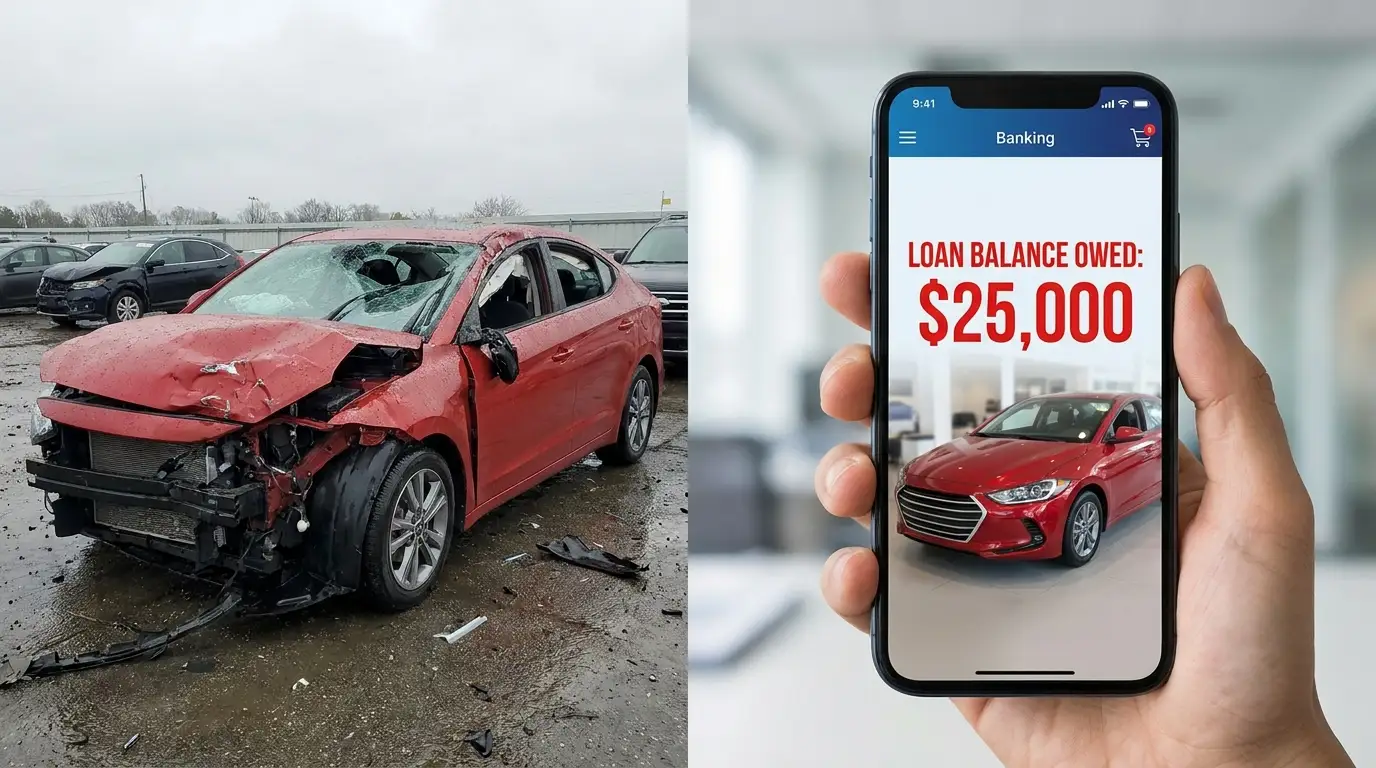
According to the Insurance Information Institute (III), new cars lose up to 20% of their value in the first year alone. However, your auto loan balance doesn’t drop that fast. This creates a “gap” between what your car is worth and what you owe.
If your car is totaled, standard auto insurance only pays the actual cash value (ACV). If you owe more than that ACV, you are legally responsible for the difference. Progressive gap insurance pays off that remaining loan balance, preventing you from making monthly payments on a vehicle that no longer exists.
Real-world example: You buy a $30,000 car with $3,000 down. After 12 months, your car is worth $22,000 (depreciated 27%). But you still owe $25,000 on your loan. If your car is totaled, Progressive’s standard auto insurance pays $22,000. Without gap insurance, you’re stuck paying the remaining $3,000 out of pocket. With Progressive gap insurance, that $3,000 gap is covered.
Note: To add gap insurance to your Progressive policy, you must already have comprehensive and collision coverage on your auto policy. If you are confused about what those coverages actually protect, check out our breakdown of what full coverage car insurance really means.
When Progressive Gap Insurance Saves You Money (5 Specific Scenarios)
Gap insurance isn’t optional fluff, it’s mathematical protection. Here are the 5 scenarios where Progressive gap insurance saves you from catastrophic losses:
Scenario 1: You Owe More Than Your Car’s Value (Negative Equity)
The Math: If your loan balance exceeds your car’s current value by $2,000 or more, you have negative equity. This is the #1 reason to buy gap insurance.
Real Example: Sarah bought a $28,000 SUV with $1,500 down. After 18 months, her car is worth $19,000, but she still owes $23,000. Her car is stolen. Progressive’s standard insurance pays $19,000. Without gap insurance, Sarah owes $4,000 for a car she no longer has. With Progressive gap insurance, that $4,000 gap is covered.
Scenario 2: You Made a Small Down Payment (Less Than 20%)
The Math: If you put down less than 20%, you start with negative equity from day one. A new car loses 10-15% of its value the moment you drive it off the lot.
Real Example: Mark bought a $35,000 truck with $2,000 down (5.7%). The moment he drives off the lot, his truck is worth $31,500. He’s already $1,500 in the hole. If he totals the truck in month 3, he owes $32,500 but the insurance only pays $30,000. Gap insurance covers that $2,500.
Scenario 3: You Have a Long Loan Term (60+ Months)
The Math: Longer loans mean slower equity buildup. A 72-month loan keeps you underwater for 3-4 years, while a 36-month loan has you building equity almost immediately.
Real Example: Jessica chose a 72-month loan to keep payments low. Her $32,000 car depreciates $4,000 per year, but her loan balance only drops $3,500 per year. After 3 years, she’s $2,000 underwater. Gap insurance protects her during this entire period.
Scenario 4: You Lease Your Vehicle
The Math: Leases almost always require gap insurance (often called “lease gap” or “wear and tear coverage”). Lease contracts are structured so you’re always “behind” on the vehicle’s residual value. If the car is totaled, you owe the remaining lease payoff balance. Progressive’s gap insurance covers this requirement.
Scenario 5: Your Car Depreciates Faster Than Average
The Math: According to Edmunds depreciation data, some cars lose value much faster than others. Luxury vehicles and certain SUVs depreciate 30-40% in the first two years.
Real Example: Lisa bought a luxury SUV that depreciates 35% in year one. Her $45,000 car is worth $29,000 after 12 months, but she still owes $41,000. That’s a $12,000 gap. Without gap insurance, she’s on the hook for $12,000.
When Progressive Gap Insurance Wastes Your Money (6 Red Flags)
Gap insurance isn’t always necessary. Here are the 6 red flags that mean you’re better off skipping it:
Red Flag 1: You Owe Less Than Your Car’s Value
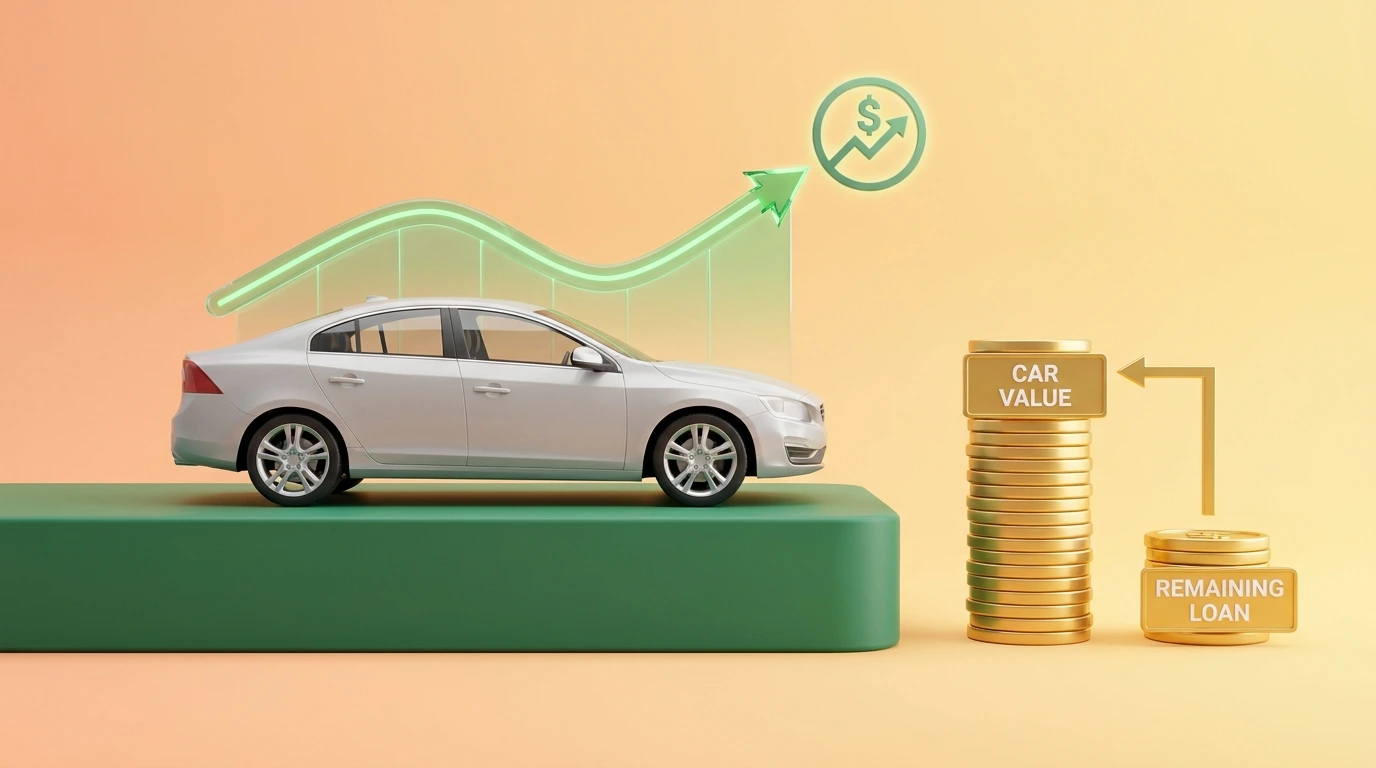
The Math: If your loan balance is less than your car’s current value, you have positive equity. If your car is totaled, the insurance payout covers your loan, and you might even have money left over. Gap insurance would be paying for a risk that doesn’t exist.
Red Flag 2: You Made a Large Down Payment (20% or More)
The Math: A 20% down payment means you start with instant equity. Even after first-year depreciation, you’re likely still above water. If you put 20% or more down, you can usually skip gap insurance after the first 12-18 months.
Red Flag 3: You Have a Short Loan Term (36 Months or Less)
The Math: Short loans mean rapid equity buildup. By month 12, you’re likely already above water. Anyone with a 24, 36, or 48-month loan rarely needs gap coverage beyond the first year.
Red Flag 4: Your Car Is Nearly Paid Off
The Math: If you’re in the final 12-18 months of your loan, your balance is low, and your car’s value has stabilized. If you are evaluating if comprehensive coverage is still worth it on an older car, you definitely don’t need gap insurance either.
Red Flag 5: You Can Afford to Self-Insure
The Math: If you have $5,000+ in emergency savings, you can cover the gap yourself if your car is totaled. Gap insurance costs $60-$120 per year. Over 5 years, that’s $300-$600. If you’d rather keep that money in a high-yield savings account, self-insure.
Red Flag 6: Your Credit Union Offers Cheaper Gap Insurance
The Math: Progressive gap insurance costs $60-$120 per year. But according to the Consumer Financial Protection Bureau (CFPB), many credit unions offer gap insurance for $200-$400 one-time (not annual). Over 5 years, Progressive costs $300-$600, while the credit union charges $200-$400 once.
Progressive Gap Insurance Cost: Is It Worth the Price?
Progressive gap insurance typically costs $60-$120 per year, or $5-$10 per month, added to your comprehensive and collision coverage. The exact cost depends on your car’s value, your loan term, and your location.
| Provider | Cost | Payment Structure | 5-Year Total |
|---|---|---|---|
| Progressive Gap Insurance | $60-$120/year | Monthly or annual | $300-$600 |
| Dealer Gap Insurance | $400-$800 | One-time (financed) | $400-$800 + interest |
| Credit Union Gap Insurance | $200-$400 | One-time | $200-$400 |
Break-Even Analysis: If your gap is $3,000 and Progressive charges $80/year, you break even in 37.5 months ($3,000 ÷ $80). If you think you’ll be underwater for longer than 3 years, gap insurance is mathematically worth it.
Alternatives to Progressive Gap Insurance
Progressive isn’t your only option. Here are the alternatives:
- Credit Union Gap Insurance: One-time fee ($200-$400), no annual payments, often cheaper over time. Must be a member.
- Dealer Gap Insurance: Convenient (bundled with purchase), but expensive ($400-$800) and financed into your loan (you pay interest on it).
- Self-Insuring: Keep your money liquid in a high-yield savings account. Requires discipline, but saves premium costs.
- Larger Down Payment: Start with equity, reducing or eliminating the gap from day one.
- Shorter Loan Term: Build equity faster and pay less interest overall, though monthly payments will be higher.
How to Add Gap Insurance to Your Progressive Policy
Adding gap insurance to your Progressive policy is straightforward:
- Call Progressive: Dial 1-800-PROGRESSIVE or log into your online account. You can also review Progressive’s official gap coverage page for state-specific availability.
- Request a Quote: Provide your car’s value, loan balance, and loan term.
- Review Requirements: You must have comprehensive and collision coverage to add gap insurance.
- Activate Coverage: Once you approve the quote, gap insurance is added to your policy immediately.
- Monitor Your Loan: Check your loan balance annually. Once you build positive equity, call Progressive to cancel gap insurance and reduce your premium.
Pro Tip: If you’re shopping around for better rates anyway, use our guide to finding cheap insurance quotes to compare Progressive against other carriers. And make sure you’re not falling for the car insurance loyalty penalty sometimes switching carriers saves you more than skipping gap insurance.
Frequently Asked Questions
Does Progressive offer gap insurance?
Yes, Progressive offers gap insurance as an add-on to comprehensive and collision coverage. It covers the difference between your car’s actual cash value and your loan/lease balance if your vehicle is totaled or stolen.
How much does Progressive gap insurance cost per month?
Progressive gap insurance typically costs $5-$10 per month, or $60-$120 per year. The exact cost depends on your car’s value, loan term, and location.
Is gap insurance worth it if I put 20% down?
Usually not. A 20% down payment means you start with instant equity. After first-year depreciation, you’re likely still above water, so gap insurance is unnecessary after the first 12-18 months.
Can I add gap insurance after buying a car?
Yes, you can add gap insurance at any time as long as you have comprehensive and collision coverage. However, it only covers future losses, not past ones.
What happens if I total my car with gap insurance?
Your standard auto insurance pays the car’s actual cash value. Progressive gap insurance then pays the difference between that amount and your loan/lease balance, so you’re not left with a car payment for a vehicle you no longer have.
Does gap insurance cover negative equity from a trade-in?
Yes, if you rolled negative equity from a trade-in into your new loan, gap insurance covers that amount. This is one of the most common reasons people need gap insurance.
Can I cancel Progressive gap insurance?
Yes, you can cancel gap insurance at any time. Call Progressive or log into your online account. You’ll receive a prorated refund for the unused portion of your premium.
Do I need gap insurance for a used car?
It depends. If the used car is financed and you owe more than it’s worth, gap insurance is worth it. If you bought the car with cash or have a short loan term, you probably don’t need it.
Final Thoughts: Protect Your Wallet, Not Just Your Car
Progressive gap insurance is a financial safety net, not a luxury. It saves you from the nightmare of making car payments on a vehicle that no longer exists. But it’s not for everyone.
Buy Progressive gap insurance if: You have negative equity, a small down payment, a long loan term, a lease, or a car that depreciates fast.
Skip Progressive gap insurance if: You have positive equity, a large down payment, a short loan term, your car is nearly paid off, you can self-insure, or your credit union offers cheaper coverage.
The key is knowing your numbers. Check your loan balance, look up your car’s value, and calculate the gap. If the gap exceeds $2,000, gap insurance is worth it. If it’s under $1,000, you’re probably fine without it.
Disclaimer: This content is general education drawn from published carrier policy documents and industry rate data, and does not replace advice from a licensed insurance agent or your state insurance department. Progressive gap insurance terms, costs, and availability vary by state and individual circumstances. Always review your specific policy documents and consult with a licensed insurance professional for advice tailored to your situation. Car values and loan balances change over time, so regularly monitor your gap risk.