
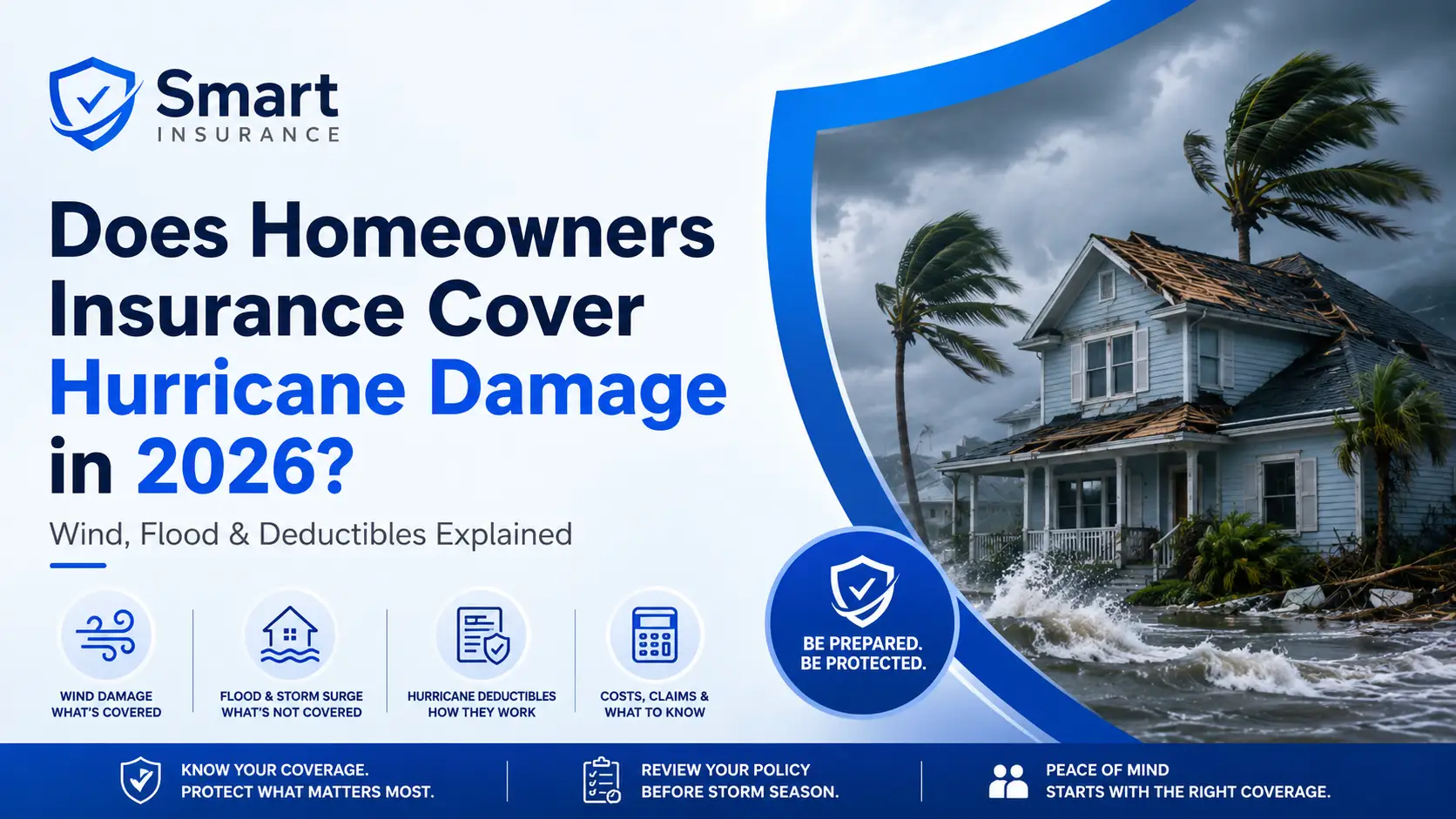
A hurricane can damage the same house in several completely different ways. Wind can tear off shingles, rain can enter through a damaged roof, and storm surge can push several feet of water through the first floor. Yet one insurance policy may not cover all three losses.
So, does homeowners insurance cover hurricane damage? Usually, it covers certain hurricane-related damage caused by wind and other covered perils. Standard homeowners insurance generally does not cover flooding or storm surge. Coastal homeowners may also face a separate hurricane, named-storm, or windstorm deductible before coverage begins.
Understanding what caused the damage matters just as much as understanding how much damage occurred.
Does Homeowners Insurance Cover Hurricane Damage?
Homeowners insurance can cover hurricane damage when the loss comes from a covered peril such as wind, hail, falling objects, or wind-related structural damage. Flooding and storm surge are generally excluded from a standard homeowners policy and require separate flood insurance. Wind coverage can also be limited or excluded in some coastal markets.
That means two homes damaged by the same hurricane can have very different claims.
One home may lose its roof because of 100-mph winds. Another may remain structurally intact but fill with three feet of storm-surge water. The first loss may fall under homeowners or wind insurance. The second generally falls under flood insurance.
Here is the basic coverage split:
| Hurricane Damage | Standard Homeowners Insurance | Separate Coverage May Be Needed |
|---|---|---|
| Wind damages roof | Often covered | Wind policy in some coastal areas |
| Hail damages siding | Often covered | Depends on wind/hail exclusions |
| Tree falls on house during storm | Often covered if caused by a covered peril | Policy terms apply |
| Rain enters through wind-damaged roof | May be covered | Depends on how water entered |
| Storm surge enters home | Generally not covered | Flood insurance |
| Rising floodwater | Generally not covered | Flood insurance |
| Personal property damaged by covered wind | Often covered | Coverage limits and settlement terms apply |
| Home becomes temporarily unlivable after a covered loss | May be covered under loss-of-use coverage | Policy limits apply |
The cause of loss, sometimes called the peril, is therefore central to a hurricane insurance claim.
What Hurricane Damage Does Homeowners Insurance Usually Cover?
Standard homeowners insurance commonly protects the dwelling, other structures, personal belongings, and additional living expenses when hurricane damage results from a covered peril. Wind is commonly covered, but homeowners in hurricane-prone coastal areas should verify whether their policy excludes wind or applies a separate wind, hurricane, or named-storm deductible.
Coverage normally falls into several parts of the policy.
Wind Damage to the House
Wind can damage shingles, roof decking, siding, windows, doors, garages, and other structural parts of a home.
If wind is a covered peril, dwelling coverage, commonly shown as Coverage A, can pay for covered repairs up to the policy limits after the applicable deductible.
Your dwelling limit should reflect the cost of rebuilding the structure rather than the home’s real estate value. Homeowners unsure about that number can review the Smart Insurance Reviews breakdown of home insurance dwelling coverage.
Coastal policies require extra attention. The National Association of Insurance Commissioners says windstorm damage may need separate coverage in some coastal areas or may come with a percentage deductible.
Wind-Driven Rain
Wind-driven rain may be covered when a covered wind event first damages the structure and allows rain to enter. For example, hurricane winds could remove part of a roof before rain enters through that opening.
FEMA’s FloodSmart guidance distinguishes this type of top-down rain damage from a flood. Rising water or storm surge is treated differently from rain entering through storm damage. The actual homeowners claim still depends on the policy wording and the cause identified by the insurer.
A window left open before the storm presents a different coverage question than a window physically broken by hurricane winds.
Personal Property
Furniture, electronics, clothing, appliances, and other belongings damaged by a covered hurricane peril may fall under personal property coverage.
How much the insurer pays can depend on whether the policy settles the loss using replacement cost coverage or actual cash value.
Replacement cost is generally based on the cost of replacing an item with a comparable new item. Actual cash value accounts for depreciation. NAIC consumer guidance explains that this difference can significantly affect claim payments after a major loss.
Additional Living Expenses
A covered hurricane loss can make a house temporarily unsafe or impossible to live in.
Additional living expenses, also called loss-of-use coverage, may help pay qualifying extra costs such as temporary lodging and additional meal expenses while covered repairs are made. The exact limits and conditions appear in the policy.
This protection generally depends on the reason the home became uninhabitable. A loss excluded from the homeowners policy does not automatically become covered simply because the family had to leave.
Does Homeowners Insurance Cover Wind Damage From a Hurricane?
Homeowners insurance usually covers wind damage unless wind is specifically excluded or handled through separate coverage. This distinction is especially important in coastal and hurricane-prone areas, where insurers may use wind/hail exclusions, separate windstorm policies, or higher percentage-based deductibles.
Do not assume that seeing “hurricane” in a weather report determines whether the claim is covered.
Look at the policy’s covered perils and exclusions instead.
For example, a hurricane could:
- Tear shingles from the roof.
- Blow a tree onto the garage.
- Break a window with flying debris.
- Damage exterior siding.
- Allow rain to enter through a wind-created opening.
Those losses may involve homeowners or wind coverage.
In certain coastal markets, homeowners may need a separate wind-only policy or another arrangement for wind and hail. That makes the declarations page and exclusions section especially important before hurricane season.
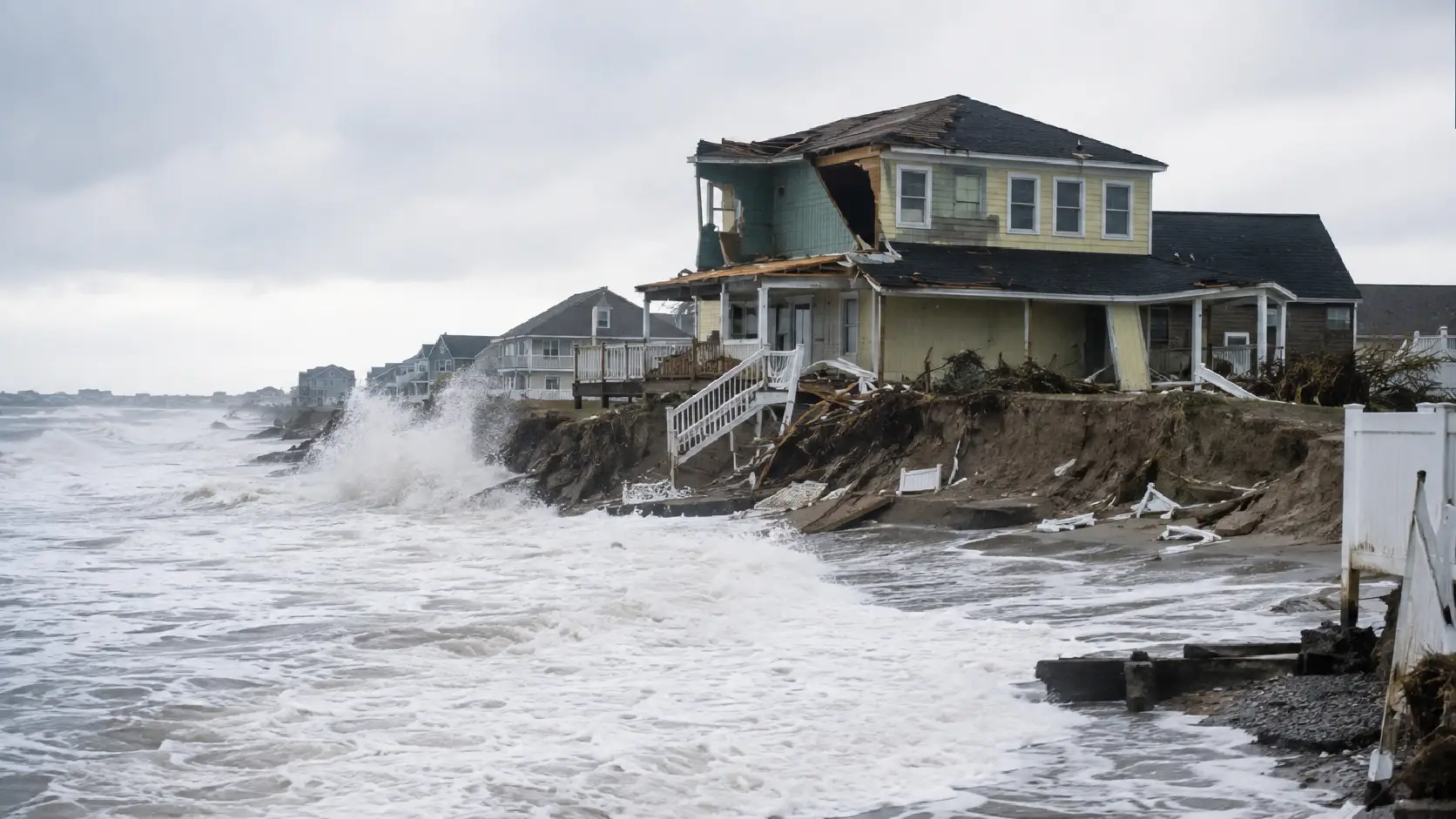
Does Homeowners Insurance Cover Roof Damage From a Hurricane?
A homeowners policy can cover hurricane roof damage when wind, hail, or another covered peril causes the loss. Payment depends on the deductible, roof exclusions, coverage limits, roof condition, and whether the policy settles roof damage at replacement cost or actual cash value.
A roof being damaged during a hurricane does not automatically guarantee full replacement.
Suppose hurricane winds remove shingles from a 15-year-old roof. The insurer may first determine whether the damage came from the storm or from wear, deterioration, poor maintenance, or another excluded condition.
The settlement method then matters.
With replacement cost coverage, a covered roof claim may qualify for the cost of replacing damaged materials subject to policy terms. Under actual cash value settlement, depreciation can reduce the initial or total payment.
The NAIC recommends understanding the difference between replacement cost and actual cash value before a storm, rather than discovering it while handling a claim.
Does Homeowners Insurance Cover Flood Damage From a Hurricane?
No, standard homeowners insurance generally does not cover hurricane flooding. If rising water, overflowing waterways, heavy surface runoff, or storm surge floods the property, homeowners generally need a separate flood insurance policy. Flood protection may be purchased through the National Flood Insurance Program or the private flood insurance market.
FEMA states that most homeowners insurance does not cover flood damage. The National Flood Insurance Program (NFIP) provides separate flood insurance for property owners, renters, and businesses.
Flood insurance can matter far beyond properties directly on the coast. FEMA says nearly one-third of NFIP claims over a recent 10-year period came from outside high-risk flood zones.
Flood Insurance vs. Homeowners Insurance After a Hurricane
| Loss | Homeowners/Wind Coverage | Flood Insurance |
|---|---|---|
| Roof torn off by wind | Often | No |
| Rain enters through storm-damaged roof | May be | Generally no |
| Storm surge floods first floor | Generally no | Yes, subject to policy terms |
| River or creek overflows into home | No | Yes, subject to policy terms |
| Wind damages personal property | May be | No |
| Floodwater damages covered building property | No | May be |
| Floodwater damages covered contents | No | May be if contents coverage was purchased |
NFIP policies provide building coverage and contents coverage as separate forms of protection. Homeowners should verify which protections they actually purchased rather than assuming one automatically includes the other.
Does Homeowners Insurance Cover Storm Surge?
Standard homeowners insurance generally does not cover storm surge because storm surge is a form of flooding. A flood insurance policy is normally needed for direct physical damage caused by hurricane-driven seawater entering normally dry land and property.
This distinction causes some of the most difficult post-hurricane claims.
A hurricane can produce both wind and storm surge at the same property. Wind may damage the roof while surge destroys walls, flooring, electrical equipment, and belongings below.
That can leave the homeowner dealing with two different insurance claims.
The homeowners or wind insurer evaluates covered wind damage. The flood insurer evaluates covered flood damage. FEMA notes that separate adjusters may need to determine which portion of a loss came from wind and which came from flooding.
How Does a Hurricane Deductible Work?
A hurricane deductible is the portion of a covered hurricane loss the homeowner must absorb before the insurer pays its covered share. Unlike a standard flat deductible, hurricane deductibles are often calculated as a percentage of the home’s insured value or dwelling limit, which can produce a much larger out-of-pocket amount.
Consider a home with $400,000 in dwelling coverage.
If the policy has:
- A 1% hurricane deductible, the homeowner’s deductible is $4,000.
- A 2% hurricane deductible, it becomes $8,000.
- A 5% hurricane deductible, it becomes $20,000.
A 5% hurricane deductible does not mean the homeowner pays 5% of the repair bill. It generally means the deductible is calculated using the applicable insured value stated in the policy.
That difference can be substantial.
A homeowner with $30,000 in covered wind damage and a $20,000 applicable hurricane deductible could be responsible for most of that repair bill.
What Is a Named Storm Deductible?
A named storm deductible is a special deductible that may apply when damage results from a storm officially given a name. It can cover a broader category of storms than a hurricane-only deductible, depending on policy language and state rules. Like hurricane deductibles, it is often percentage-based.
A hurricane deductible, named storm deductible, and windstorm deductible are not automatically interchangeable.
Their triggers can differ.
A policy may specify when the deductible starts applying and when it stops. State law can also affect permissible deductible structures and trigger rules.
The number that matters is the deductible written into your declarations page and policy, not the deductible used by a neighbor or another insurer.
Hurricane Deductibles Vary by State and Policy
There is no single nationwide hurricane deductible rule. State insurance laws, carrier policy forms, coastal risk, dwelling limits, and deductible selections can all change what a homeowner must pay. Some policies use hurricane deductibles, others named-storm or wind/hail deductibles, and some coastal properties need separate wind coverage.
Florida provides a useful example of how state-specific the rules can become.
The Florida Department of Financial Services says insurers generally must offer hurricane deductible choices of $500, 2%, 5%, or 10% of the dwelling or structure limit, subject to specified exceptions. Florida also has rules governing when the hurricane deductible applies during a calendar year.
A homeowner elsewhere should not assume Florida’s rules apply to their policy.
Check three places:
- The homeowners policy declarations page.
- Any hurricane, named-storm, or wind/hail endorsement.
- Guidance from your state’s Department of Insurance.
The deductible choice can also affect premiums. Homeowners comparing deductible options may find useful context in Smart Insurance Reviews’ analysis of the average home insurance cost in 2026.
What Happens When Wind and Flood Damage the Same House?
A home damaged by both hurricane wind and flooding may involve separate claims because the causes of loss fall under different policies. The homeowners or wind insurer evaluates wind-related damage, while the flood insurer evaluates direct flood damage. Determining the exact cause can become critical when both forces damage the same rooms or structure.
Imagine that hurricane winds remove part of a home’s roof at 2 p.m. Heavy rain then damages the upstairs ceiling and bedroom.
Several hours later, storm surge enters through the first floor and reaches four feet high.
The damage does not necessarily belong to one policy simply because one hurricane caused the entire event.
The roof and top-down rain damage may be evaluated under homeowners or wind coverage. Damage caused by storm surge may fall under the flood policy.
FEMA says adjusters can perform room-by-room estimates and document which peril caused each part of the loss. Complex losses may require additional expertise to separate wind damage from flood damage.
Photos, videos, repair estimates, timestamps, weather information, and a detailed inventory can become valuable evidence.
What Should You Check Before the Next Hurricane?
The best time to discover a coverage gap is before a storm is named and approaching your property. Review the policy’s dwelling limit, wind coverage, hurricane or named-storm deductible, flood protection, roof settlement terms, and additional living expense limits while changes to coverage are still available.
Start with these checks:
- Find the Coverage A dwelling limit and compare it with a realistic current rebuilding estimate.
- Locate the standard deductible and any separate hurricane deductible, named storm deductible, or windstorm deductible.
- Confirm whether wind and hail are included, excluded, or insured elsewhere.
- Read the roof settlement language and determine whether covered roof losses use replacement cost or actual cash value.
- Verify whether you already have NFIP or private flood insurance.
- Check whether contents coverage is included in the flood policy.
- Review additional living expense limits under the homeowners policy.
- Photograph the exterior and every room before severe weather arrives.
- Save the policy, declarations page, insurer phone number, and inventory somewhere accessible away from the house.
Flood insurance also requires advance planning. FEMA’s FloodSmart program notes that NFIP coverage commonly has a 30-day waiting period before it takes effect, although exceptions apply. Buying coverage after a hurricane is already approaching may therefore be too late for that storm.
Homeowners shopping for a replacement policy can also compare what insurers request through the Smart Insurance Reviews breakdown of an Allstate homeowners insurance quote.
Frequently Asked Questions
Does home insurance cover hurricanes?
Home insurance can cover some hurricane losses, especially damage caused by covered wind, hail, falling objects, and related structural damage. Flooding and storm surge are generally excluded. Coastal policies may also exclude wind or require separate wind coverage and a special deductible.
Is hurricane insurance a separate policy?
There is no single standard policy called “hurricane insurance” that covers every hurricane-related loss nationwide. Protection can involve homeowners insurance, separate windstorm coverage, and flood insurance. The exact combination depends on the property, state, carrier, and policy terms.
Is storm surge considered wind or flood damage?
Storm surge is generally treated as flooding for insurance purposes. FEMA identifies storm surge from hurricanes as a type of flood risk, so a separate flood policy is generally needed for storm-surge damage.
Does homeowners insurance cover a hurricane-damaged roof?
It may. Roof damage caused by covered wind or hail can fall under homeowners or wind insurance. Payment still depends on exclusions, deductibles, roof condition, policy limits, and whether the roof is insured at replacement cost or actual cash value.
How much is a hurricane deductible?
There is no national fixed amount. Hurricane deductibles may be expressed as a percentage of the insured dwelling value and can be much larger than the policy’s normal deductible. State rules and insurer offerings differ.
Do I need flood insurance if I am not in a high-risk flood zone?
Flood risk exists outside high-risk zones. FEMA reports that nearly one-third of NFIP claims over a recent 10-year period came from outside high-risk flood zones. Whether flood insurance makes sense depends on your property’s flood exposure, finances, mortgage requirements, and available coverage.
Can I file both a homeowners claim and a flood claim after a hurricane?
Yes, when the property experienced damage from separate covered causes such as wind and flooding. Each insurer evaluates the damage covered by its policy, and adjusters may need to determine which peril caused each part of the loss.
The Bottom Line
Homeowners insurance does cover some hurricane damage, but it does not provide blanket protection against everything a hurricane can do. Wind-related damage is commonly covered unless excluded or insured separately. Flooding and storm surge generally require flood insurance. A hurricane, named-storm, or windstorm deductible may also leave the homeowner responsible for thousands of dollars before coverage pays.
The safest approach is to separate hurricane risk into three questions: Do I have wind coverage? Do I have flood coverage? What deductible applies to each?
Then read the actual policy language.
A declarations page that shows $400,000 of dwelling coverage can look reassuring until you discover a 5% hurricane deductible, a wind exclusion, or no flood policy at all. Those details determine how the insurance performs after the storm.
Disclaimer: Smart Insurance Reviews provides general insurance education and not individualized insurance, legal, or financial advice. Coverage, exclusions, deductible triggers, claim rules, and policy availability vary by state and insurer. Review your policy documents and contact a licensed insurance professional or state insurance department for advice about your specific coverage.