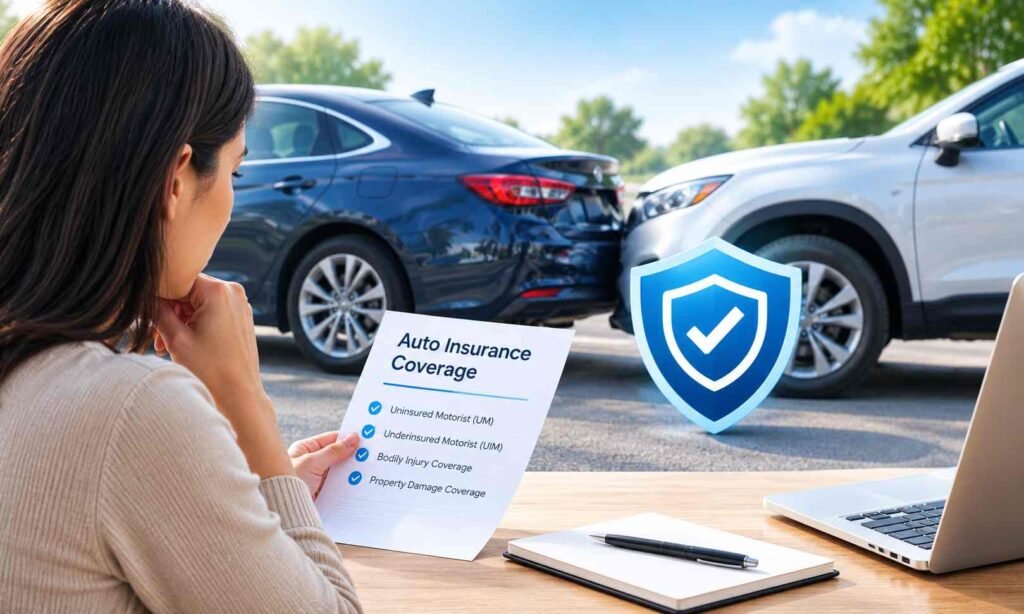
A car crash is stressful enough. Finding out afterward that your insurer will not pay can turn a manageable problem into a financial crisis.
If your car insurance claim was denied, the decision usually comes down to one of three things: the policy did not cover the loss, the insurer believes a policy condition was not met, or the company disputes the facts of the claim. A denial does not automatically mean the insurer is correct, though. State insurance rules, your policy wording, and the evidence behind the claim all matter.
The issue deserves extra attention in 2026. Recent analysis of U.S. insurer regulatory filings found a growing share of resolved auto liability and medical claims closing without payment. That does not mean every unpaid claim was denied, but it shows why drivers need to understand exactly how coverage decisions are made.
Why Are Car Insurance Claims Being Denied in 2026?
Car insurance claims may be denied when coverage was not active, the loss falls outside the policy, an exclusion applies, a regular driver was not disclosed, information was inaccurate, liability cannot be established, or the insurer suspects fraud. Sometimes a claim closes without payment for a simpler reason, such as damage falling below the deductible.
The distinction matters.
A denied insurance claim means the insurer has decided it does not owe some or all of the requested payment. A claim that closes without payment is broader. It can also include withdrawn claims, losses paid by another insurer, losses below a deductible, or events that were never covered by the policy.
Recent Wall Street Journal analysis of thousands of insurer regulatory filings found that about 45% of resolved auto liability and medical claims closed without payment in the most recent year examined, compared with roughly 35% a decade earlier. Insurers told the publication that these figures include several situations beyond outright claim denials.
That distinction should be kept in mind whenever you see statistics about unpaid auto claims.
9 Common Reasons a Car Insurance Claim May Be Denied
| Reason | What It Usually Means | What to Check First |
|---|---|---|
| Policy was not active | Coverage lapsed or ended before the accident | Policy dates and payment history |
| Wrong type of coverage | The loss is not covered by the protection purchased | Declarations page |
| Policy exclusion applies | Specific circumstances are excluded | Exclusions section |
| Driver was not properly disclosed | Regular, household, or excluded-driver rules may apply | Driver listings and endorsements |
| Material information was inaccurate | Insurer believes important information was misrepresented | Application and renewal records |
| Evidence does not support the loss | Damage, cause, or accident details cannot be verified | Photos, reports, estimates |
| Liability is disputed | Insurer disagrees about who caused the accident | Police report and witness evidence |
| Fraud is suspected | Insurer sees inconsistent or potentially false information | Claim records and investigation requests |
| No payable amount remains | Deductible, limits, prior damage, or another payment affects the claim | Settlement calculation |
The exact result depends on your policy and your state’s insurance laws.
1. Your Policy Was Not Active When the Accident Happened
An insurer generally cannot pay a loss under coverage that was no longer in force when the accident occurred. A policy lapse can happen after cancellation, expiration, or failure to make required premium payments.
The first thing to check is the effective date shown on your policy documents.
Compare:
- the accident date and time;
- the policy’s effective and expiration dates;
- recent premium payments;
- cancellation or nonrenewal notices;
- automatic-payment records; and
- any reinstatement correspondence.
Do not assume that making a late payment automatically creates retroactive coverage for an accident that happened during a lapse. The answer can depend on the insurer, reinstatement terms, policy language, and state law.
If you believe the insurer canceled the policy improperly, ask for the cancellation history and written reason. State insurance departments can also handle complaints involving allegedly improper cancellation or nonrenewal. Texas, for example, expressly tells consumers they may complain if they believe a company improperly denied, canceled, or nonrenewed a policy.
2. You Did Not Buy the Coverage Needed for That Loss
Having “car insurance” does not mean every type of vehicle loss is covered.
Liability coverage, collision coverage, comprehensive coverage, uninsured motorist protection, and medical-related coverages serve different purposes. A driver can therefore have an active policy and still submit a claim for something the policy does not insure.
For example, liability insurance primarily addresses covered injuries or property damage you cause to others. It generally is not the coverage used to repair your own car after an at-fault collision.
Collision coverage is typically the relevant protection for physical damage to your vehicle from a collision, subject to the policy terms and deductible.
Comprehensive coverage generally addresses certain non-collision losses, such as theft, vandalism, or covered weather damage.
The National Association of Insurance Commissioners advises consumers to understand these separate coverages because protection varies significantly depending on what was actually purchased.
If you are uncertain about these differences, see Smart Insurance Reviews’ explanation of What full coverage car insurance actually includes.
3. A Policy Exclusion Applies to the Accident
An insurance policy exclusion identifies situations the contract does not cover. Even when the general type of damage appears covered, an exclusion can change the result.
Exclusions vary considerably between policies and states.
A coverage dispute might involve issues such as:
- an expressly excluded driver;
- certain commercial uses of a personal vehicle;
- intentional damage;
- racing or prohibited vehicle use;
- damage that existed before the insured event;
- specific excluded property; or
- another circumstance specifically addressed by the contract.
Do not rely only on the summary shown in an insurance app.
Read the actual policy form, endorsements, declarations page, and the provision cited in the claim denial letter.
The insurer should be able to identify the policy language supporting its decision. State claim-handling rules may impose additional requirements. California’s Fair Claims Settlement Practices Regulations, for example, establish standards governing the handling, acceptance, and denial of insurance claims within that state.
4. A Regular or Household Driver Was Not Disclosed
A car insurance claim denied because a driver was not listed has become an especially important issue for U.S. households.
Not every person who occasionally borrows a car must necessarily be listed on every policy. But a licensed household member or someone who regularly uses the vehicle can create a different situation.
The NAIC warns that failing to inform an auto insurer about drivers using a vehicle can potentially result in future claims being denied and a policy being canceled or not renewed because of misrepresentation involving licensed household members.
The issue has received new attention in 2026.
Recent reporting found that State Farm had tightened policy language concerning notification of new regular drivers. Internal documents reviewed by The Wall Street Journal said claims involving undisclosed drivers were costing the insurer nearly $1.5 billion annually.
If an undisclosed driver insurance claim is denied, determine whether the person was:
- a household resident;
- a regular driver of the vehicle;
- specifically excluded;
- newly licensed;
- temporarily borrowing the car; or
- already disclosed to the insurer or agent.
Those facts can materially change the coverage analysis.
5. The Insurer Says Important Information Was Misrepresented
Material misrepresentation generally refers to inaccurate or omitted information important enough to affect an insurer’s underwriting or coverage decision.
The dispute may concern information provided when the policy was purchased, renewed, or changed.
Examples can include inaccurate information about:
- drivers living in the household;
- where a vehicle is normally kept;
- who regularly drives the vehicle;
- vehicle use;
- ownership; or
- other facts requested by the insurer.
A simple mistake and intentional insurance fraud are not automatically the same thing.
The legal consequences of incorrect information also vary by state. That is why a car insurance claim denied for misrepresentation should be examined against both the exact policy language and applicable state law rather than assuming every omission automatically eliminates coverage.
Request copies of the application, renewal documents, endorsements, and any information the insurer says was inaccurate.
6. The Evidence Does Not Establish What Happened
An insurer needs enough information to determine whether a covered loss occurred and how much it owes.
A claims adjuster may review vehicle damage, photographs, statements, repair estimates, police information, medical records when relevant, and other evidence connected with the accident.
The NAIC advises policyholders to cooperate with the adjuster’s investigation and to report claims promptly. It also recommends gathering accident details and documenting damage.
Problems can arise when:
- photos do not clearly show the damage;
- accounts of the accident conflict;
- there is no reliable record of when damage occurred;
- claimed damage appears unrelated to the crash;
- requested documents are missing; or
- previously existing damage is mixed with new damage.
After a collision, preserve evidence before repairs begin whenever it is safe and practical.
Useful documentation can include photos from several angles, dashcam footage, witness contact information, repair estimates, the police report number, receipts, and written communication with the insurer.
7. The Insurance Company Disputes Liability
A car accident insurance claim may be denied or reduced when the insurer disputes who was legally responsible for the crash.
This issue is especially important in third-party claims, where you seek payment from another driver’s liability insurance.
Fault rules are not identical across the United States.
Depending on the state and circumstances, responsibility shared between drivers can affect how much someone can recover. No-fault insurance systems also treat certain injury claims differently from traditional fault-based systems.
Evidence becomes critical in a liability dispute.
Useful records may include:
- crash reports;
- intersection or security footage;
- dashcam video;
- photographs of vehicle positions;
- witness statements;
- traffic citations;
- vehicle damage patterns; and
- accident-reconstruction evidence in major disputes.
Do not assume the other driver’s citation automatically resolves an insurance liability investigation. The insurer can perform its own assessment using the available evidence.
8. The Insurer Suspects Fraud or Finds Major Inconsistencies
Insurers investigate claims for possible insurance fraud, including staged accidents, inflated losses, false statements, altered documents, and damage that may not have occurred as reported.
Fraud screening has attracted more attention as insurers face increasingly sophisticated methods of manipulating claim evidence.
Recent industry reporting cited fraud, including concerns about AI-assisted fake claims, as one reason insurers say claim scrutiny has increased. Consumer advocates and plaintiffs’ attorneys dispute whether tougher claim handling fully explains the broader rise in unpaid claims.
For an ordinary policyholder, consistency matters.
Do not guess when answering an adjuster’s questions. If you do not remember something, say so rather than inventing a detail.
Keep copies of:
- your original claim;
- photographs submitted;
- written statements;
- repair invoices;
- receipts;
- police documentation; and
- correspondence with the insurer.
A fraud investigation does not by itself prove fraud occurred. But false information can seriously damage an otherwise valid claim.
9. The Claim Produces No Payable Amount
Not every claim that ends with zero dollars was rejected because the insurer believes something improper occurred.
Sometimes the calculation simply produces no payable amount.
Suppose covered damage is valued at $800 and the applicable insurance deductible is $1,000. Depending on the claim and policy, there may be nothing for the insurer to pay.
Other situations can involve:
- damage below the deductible;
- prior damage that is not part of the current loss;
- payment from another responsible insurer;
- a policy limit that restricts available benefits;
- a withdrawn claim; or
- a loss outside the purchased coverage.
This explains why “closed without payment” and “denied” should not be used as synonyms.
Insurers specifically told The Wall Street Journal that regulatory no-payment figures include claims under the deductible, claims paid elsewhere, withdrawn claims, and losses outside policy terms.
What Should You Do If Your Car Insurance Claim Is Denied?
Start by getting the denial in writing and identifying the exact policy provision the insurer relied on. Then compare the insurer’s reasoning with your policy, collect evidence that addresses the disputed issue, and use the company’s review or appeal process. If the dispute remains unresolved, your state insurance department may be able to review a complaint.
Use this order.
1. Read the Entire Claim Denial Letter
Do not focus only on the sentence saying payment was refused.
Look for:
- the reason for denial;
- policy provisions cited;
- dates involved;
- facts the insurer relied upon;
- evidence it says is missing; and
- instructions for challenging the decision.
Create a separate list of anything you believe is factually wrong.
2. Get a Complete Copy of Your Policy
You need more than the declarations page.
Request the applicable:
- policy form;
- declarations;
- endorsements;
- exclusions; and
- amendments.
Then read the cited provision in context.
3. Ask the Adjuster Specific Questions
Instead of asking only, “Why did you deny my claim?” ask questions that can produce useful answers.
For example:
- Which policy provision applies?
- Which fact triggered that provision?
- What evidence supports that conclusion?
- Would additional documentation change the decision?
- Is there an internal reconsideration process?
- What is the deadline to dispute the decision?
Keep records of conversations and save important communication in writing.
4. Build Evidence Around the Actual Dispute
If the problem is an unlisted driver, gather records showing the person’s residence and vehicle use.
If liability is disputed, focus on crash evidence.
If the insurer says the damage was pre-existing, gather prior vehicle photographs, service records, inspection records, or dated images.
An effective claim appeal addresses the insurer’s stated reason rather than simply repeating that you disagree.
5. Request Reconsideration or Appeal
Send your evidence with a concise explanation of why you believe coverage applies.
Reference:
- your claim number;
- policy number;
- denial date;
- disputed policy language;
- supporting documents; and
- the outcome you are requesting.
Keep proof that the appeal was submitted.
6. Contact Your State Insurance Department When Necessary
Insurance is regulated primarily at the state level, so complaint procedures and claim-handling standards vary.
The NAIC directs consumers who are dissatisfied with an insurer over issues such as delays, denials, or unsatisfactory settlements to their state department of insurance.
A regulator can review whether an insurer followed applicable insurance rules. That does not mean every regulator complaint results in payment.
For large losses, serious injuries, or complicated coverage disputes, independent legal advice may also be appropriate.
Can an Insurance Company Deny a Claim Because the Driver Wasn’t Listed?
Yes, a claim can potentially be denied because a driver was not disclosed, but an unlisted driver does not automatically mean every claim is excluded. The result can depend on whether that person lived in the household, regularly used the vehicle, was specifically excluded, what the policy required the policyholder to disclose, and the law of the state involved.
This is why the words unlisted driver, undisclosed driver, and excluded driver should not be treated as interchangeable.
An excluded driver may be expressly identified as someone the policy does not cover under specified circumstances.
An undisclosed household driver creates a different question: whether the policyholder was required to report that person and whether failing to do so affects coverage.
A friend who unexpectedly borrows a vehicle once can present yet another coverage question.
The NAIC specifically advises consumers to inform insurers about licensed household members because nondisclosure can affect claims and continued coverage.
What If the Insurance Company Refuses to Pay a Car Accident Claim?
If an insurance company refuses to pay a car accident claim, first determine whether you are dealing with your own insurer or someone else’s insurer.
That distinction matters.
A first-party claim generally involves coverage under your own policy. A third-party claim generally seeks payment under another person’s liability coverage.
Your contractual rights against your own insurer are not necessarily identical to your rights when making a claim against another driver’s insurer.
If the disagreement involves your own collision or comprehensive coverage, review your policy’s dispute-resolution provisions as well. Some states provide additional options in qualifying disputes. California, for example, has an automobile claims mediation program for certain physical-damage disagreements that meet statutory eligibility requirements.
For a broader look at insurer payment issues, see Which auto insurers actually pay claims and what consumers should compare.
How Long Can a Car Insurance Claim Investigation Take?
There is no single nationwide deadline that applies identically to every auto claim.
Claim-handling deadlines are largely state-specific, and complex investigations can take longer than straightforward property-damage claims. Factors such as disputed liability, serious injuries, multiple vehicles, fraud concerns, missing documentation, or questions about coverage can extend a claims investigation.
The NAIC notes that claims requiring special or extended investigation may take longer to resolve.
Some states establish specific claim-handling timeframes.
California regulations, for example, generally require insurers to accept or deny a claim within 40 calendar days after receiving proof of claim, subject to the rules and exceptions contained in the regulations. That California requirement should not be assumed to apply nationwide.
If your problem is delay rather than an outright denial, Smart Insurance Reviews has also examined What can happen when an auto insurance claim is delayed.
How to Reduce the Risk of a Future Claim Denial
You cannot control every coverage decision, but several problems are easier to prevent before an accident.
Review who is listed on your policy
Tell your insurer when a licensed person joins your household or begins regularly driving your vehicle. Ask how the company treats occasional, household, and excluded drivers.
Check your declarations page after every renewal
Confirm your:
- vehicles;
- drivers;
- address;
- coverage limits;
- deductibles; and
- optional coverages.
Do not assume last year’s coverage automatically remained unchanged.
Understand what “full coverage” really means
“Full coverage” is an informal phrase, not a promise that every possible loss is insured. Review the individual coverages and exclusions instead.
If you are deciding whether physical-damage protection still makes sense for an older vehicle, compare the trade-offs in Whether comprehensive car insurance is worth the cost.
Report accidents promptly
Follow the reporting requirements in your policy. Preserve evidence before details disappear or a damaged vehicle is repaired.
Keep your information accurate
Changes in household drivers, vehicle use, garaging location, or other underwriting information may need to be reported.
If you are unsure, ask your insurer in writing and save the response.
A Denied Claim Is a Decision, Not the End of the Review
A car insurance claim denial can be legitimate, questionable, or based on a factual misunderstanding. The only way to know which situation you have is to connect the insurer’s reason to the actual policy language and evidence.
Start with the denial letter. Find the provision being cited. Check whether the insurer’s facts are accurate. Then gather evidence that addresses that specific issue.
And remember the key 2026 distinction: a growing number of auto claims closing without payment does not mean every one of those claims was formally denied. Deductibles, withdrawals, other insurers, exclusions, coverage disputes, and true denials can all produce a zero-payment result.
If the explanation still does not make sense after the insurer reviews your evidence, your state insurance department is the next independent place to check your options.
Frequently Asked Questions
Can a car insurance company deny a claim after accepting it?
An insurer can change a preliminary coverage position if later information materially changes its investigation, but the rules depend on the policy and state law. Ask for the final decision and supporting policy language in writing. If you believe the company handled the claim improperly, contact your state insurance department.
What happens when car insurance denies a claim?
The insurer generally does not pay the denied portion of the loss. You may still be able to request reconsideration, provide additional evidence, use an available dispute process, or file a complaint with your state’s insurance regulator. Your options depend on whether it is your policy, another driver’s policy, and the reason for denial.
How do I appeal a denied car insurance claim?
Read the denial letter, obtain the complete policy, identify the disputed facts, and submit evidence directly addressing the insurer’s reason. Ask the insurer for its reconsideration or appeal procedure and any deadline. Keep copies of everything you send.
Can a claim be denied for an unlisted driver?
Potentially. The outcome depends on the driver’s relationship to the household, how regularly the person used the vehicle, whether the person was excluded, the policy’s disclosure requirements, and state law. The NAIC warns that failure to disclose licensed household drivers can potentially affect both claims and continued coverage.
Can an insurer deny a claim for late reporting?
Late reporting can create a coverage dispute, particularly if the policy requires prompt notice. Whether delay alone justifies denial can depend on the policy and applicable state law. Report accidents as soon as reasonably possible and document when notice was provided.
Does a denied insurance claim mean insurance fraud?
No. Claims are denied for many reasons unrelated to fraud, including coverage exclusions, policy lapses, disputed liability, insufficient evidence, deductibles, and driver-disclosure issues. Fraud is only one possible reason for an insurer to investigate or refuse a claim.
Can I complain about a car insurance claim denial?
Yes. The NAIC directs consumers with complaints involving insurance-company delays, denials, or unsatisfactory settlements to the appropriate state department of insurance. The regulator can review whether the insurer complied with applicable state requirements.
Is a claim closed without payment the same as a denied claim?
No. A denial is one reason a claim can end without payment, but it is not the only one. Claims may also close because the loss is below the deductible, another insurer paid it, the customer withdrew the claim, or no covered amount remained.