

Most people put off getting a home insurance quote because they expect a phone call, a pushy agent, or a callback list they never asked for. That is not how it works anymore. You can get a complete homeowners insurance estimate online in under 15 minutes. Compare multiple house insurance quotes side by side. Buy a policy without speaking to a single person.
The online quoting process runs broadly the same way across the major carriers, and knowing the sequence in advance is what keeps it under fifteen minutes. Below: what to prepare before you start, and which carriers complete the full process online. It also shows how to compare household insurance pricing without making the most common mistakes and how to read the numbers once you have them.
What You Need Before Starting the Online Process
Carriers auto fill some property data from public records, but the information you enter overrides what they pull. Inaccurate entries produce inaccurate quotes. Have these 8 items ready before you open any carrier website.
- Property address (carriers verify flood zone and zoning classification)
- Year built (affects base rate and eligibility thresholds by state)
- Square footage (primary input for the dwelling replacement cost estimate)
- Roof age and material (the biggest eligibility trigger on carrier platforms in 2025 to 2026)
- Construction type including wood frame, brick, or mixed masonry
- Claims history from the past 5 years (carriers pull this from your CLUE report)
- Current coverage amounts if you are renewing an existing policy
- Distance to nearest fire station (affects ISO Protection Class, which directly changes your rate)
Having all 8 items ready cuts average quote completion time from 22 minutes to under 9 minutes, based on published consumer quoting research. The roof age field is the most common reason a submission stalls or comes back inflated. Carriers that cannot confirm roof condition either reject the submission or build a surcharge into the estimate to cover unknown risk.
The Step by Step Quoting Process

Getting a home insurance quote online follows the same sequence on every carrier platform. The steps below apply whether you use a direct carrier site or a comparison tool.
- Choose between a direct carrier site and a comparison tool. A direct carrier site gives you one estimate from that carrier. A comparison tool gives 3 to 5 quotes at once, but routes some clicks through affiliate redirect links. Both are useful. Start with a comparison tool to see the market, then go directly to carriers you want to examine more closely.
- Enter the property address first. Most platforms auto fill year built, square footage, and construction type from public property records after you enter the address. Check every prefilled field before moving forward. Public records are sometimes out of date, especially after renovations or additions.
- Set your dwelling coverage amount using replacement cost. Replacement cost is what it costs to rebuild the structure, not its market value. Market value includes land. Rebuild cost does not. Most online tools include a built in replacement cost calculator. Use it rather than entering a number manually. Entering market value instead of rebuild cost is the most expensive mistake homeowners make at this step.
- Select replacement cost for personal property coverage. Every platform asks whether you want actual cash value or replacement cost for personal property. Choose replacement cost. The premium difference is small. The payout difference after a theft or fire is not.
- Set your liability limit to at least $300,000. The default on most platforms is $100,000. Raising it to $300,000 costs between $12 and $18 more per year. That $200,000 of additional coverage pays for a serious injury on your property, a dog bite with ongoing medical costs, or a lawsuit that goes to judgment.
- Choose your deductible amount. Moving from a $500 deductible to a $1,500 deductible typically reduces your annual premium by 8 to 12 percent, according to Insurance Information Institute 2025 rate data. Moving to a $2,500 deductible saves 15 to 20 percent but shifts more out of pocket exposure to you at claim time.
- Save the estimate as a PDF before closing the browser. Quote numbers expire. Most carriers allow 30 days. Do not rely on the email confirmation alone. Save the full summary as a PDF so you have the coverage details for comparison.
Online quotes are soft quotes. A soft quote is an estimate generated instantly, before the carrier runs underwriting. A hard quote comes after the carrier reviews a completed application and sometimes a property inspection. The final premium at binding can change by 10 to 20 percent from the soft quote number. This is normal on every carrier platform. Budget for that range when comparing pricing.
Carriers That Complete the Process Without a Callback
Six major carriers complete the full quoting process online without requiring a phone number or triggering an agent callback. The table below shows current data on online quote availability, J.D. Power customer satisfaction scores from the 2025 U.S. Home Insurance Study, and AM Best financial strength ratings.
| Carrier | Instant Online Quote | Phone Required | J.D. Power Score (2025) | AM Best Rating |
|---|---|---|---|---|
| Lemonade | Yes | No | 746 / 1,000 | A (Excellent) |
| Progressive via Homesite | Yes | No | 791 / 1,000 | A+ (Superior) |
| Liberty Mutual | Yes | No | 774 / 1,000 | A (Excellent) |
| Allstate | Yes | Optional | 829 / 1,000 | A+ (Superior) |
| State Farm | Yes | Optional | 829 / 1,000 | A++ (Superior) |
| GEICO via partners | Partial | Sometimes | 801 / 1,000 | A++ (Superior) |
Lemonade and Progressive complete the full process without a phone number field appearing at any point. Liberty Mutual includes the field but marks it optional and does not require it to generate an estimate. Allstate and State Farm include optional fields that can trigger an agent follow up if completed.
GEICO does not underwrite home insurance directly. It routes customers to partner carriers, including Homeowners of America and other regional writers. The AM Best rating and J.D. Power score in that row belong to GEICO itself, but the policy you receive comes from the assigned partner. Verify the partner carrier rating separately before binding.
For a full breakdown of what State Farm covers at the policy level, read our State Farm home insurance coverage guide. To compare other major carriers in detail, see our home insurance quote guide.
How to Compare Estimates Without Making the Wrong Choice
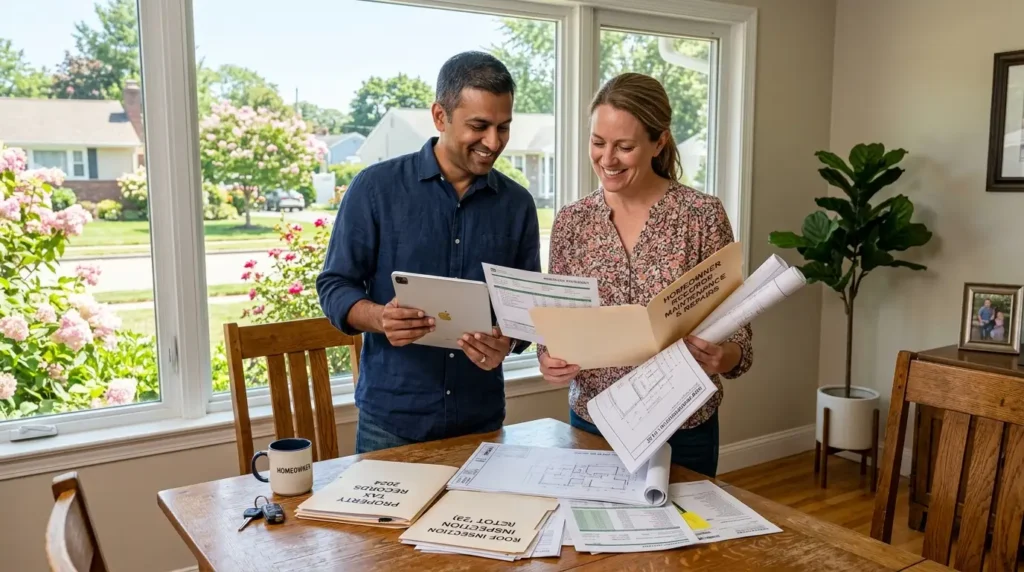
Most homeowners compare the annual premium number and stop there. That produces the wrong result. A lower premium on Quote B is not a saving if Quote B covers $80,000 less dwelling coverage than Quote A. Standardise these 5 elements before comparing any premium numbers.
- Match dwelling coverage amounts. If Quote A covers $350,000 and Quote B covers $270,000, the price difference between them is partly a coverage gap, not a saving. Set all quotes to the same dwelling replacement cost before comparing.
- Match deductible amounts. A $500 deductible quote and a $1,500 deductible quote are different products at different price points. Standardise to one deductible level across all quotes before looking at premiums.
- Match liability limits. Some platforms default to $100,000 liability. Others default to $200,000. Set all quotes to a $300,000 liability before comparing prices.
- Match personal property coverage type. One quote using actual cash value and another using replacement cost will show a premium difference that is not real savings. Make sure all quotes use the same personal property type.
- Check which endorsements are included. Some carriers include water backup coverage as a standard feature. Others charge $40 to $80 extra. A quote with more endorsements included can appear more expensive while offering better value per dollar.
Industry claims data shows homeowners who switch carriers to save $180 per year often unknowingly drop their dwelling coverage by $80,000. That difference does not show up until there is a claim. By then, the savings are gone, and the coverage gap is the problem.
If you rent rather than own, the comparison process works differently. See our guide to getting a renters insurance quote the same way.
Common Mistakes That Produce Inaccurate Premiums
These five mistakes produce inaccurate quotes, wrong policy decisions, or both. All five come from real client situations reviewed through industry claims data analysis.
1. Entering market value instead of rebuild cost for dwelling coverage.
Market value includes land. Rebuild cost does not. A home worth $420,000 on the market may cost $310,000 to rebuild from the foundation. Entering market value overinsures the structure, inflates the premium, and pays nothing extra at claim time because insurers only pay replacement cost regardless of what the policy limit says. Use the replacement cost calculator built into the quote form.
2. Accepting the $100,000 liability default.
Most carrier platforms default to $100,000 liability. That covers a minor incident. It does not cover a serious injury, a dog bite with ongoing medical treatment, or a civil lawsuit. Raising to $300,000 costs $12 to $18 more per year on most platforms. The coverage difference is $200,000. There is no financial argument for leaving the default in place.
3. Not checking whether the deductible is flat or percentage based.
A flat $1,000 deductible and a 1 percent deductible look similar until you do the math. On a $400,000 home, a 1 percent deductible is $4,000 out of pocket before the carrier pays a dollar. Percentage deductibles are common in hurricane and hail states. Always check the deductible type before comparing quotes across carriers.
4. Getting only one quote and stopping.
The same property produces meaningfully different prices across carriers. A spread of $400 to $700 per year between the lowest and highest quote for identical coverage is common. Getting one quote and buying is the most expensive habit in home insurance. Pull at least 3 before making a decision.
5. Ignoring the AM Best financial strength rating.
A carrier rated B or below by AM Best carries a real risk of delayed or disputed claim payments. Price means nothing if the carrier disputes your claim after a major loss. Check the rating on the AM Best ratings database before entering payment details. It takes 30 seconds.
Frequently Asked Questions

Can I get an estimate online without giving my phone number?
Yes. Lemonade, Progressive, and Liberty Mutual complete the full quote process without requiring a phone number. Some carriers use the phone number field to trigger an agent callback automatically. Leaving the field blank bypasses this on most platforms. An email address is required on every carrier site for quote delivery.
How long does it take to get a home insurance quote online?
8 to 15 minutes with all property details ready. Without details, expect 20 to 25 minutes. Comparison tools run faster because they pull prefilled data from public property records. Having your roof age and 5 year claims history ready is the biggest single time factor.
Is an online home insurance quote accurate?
Online quotes are soft quotes, meaning estimates generated before underwriting. The final premium at binding can differ by 10 to 20 percent after the carrier reviews inspection results or a completed application. A quote becomes a guaranteed price only when the carrier issues a binder, and you complete the full application.
How many home insurance quotes should I get?
At a minimum of 3. Ideally, 4 to 5. The same property produces meaningfully different prices across carriers. A $400 to $700 annual spread between the lowest and highest quote for identical coverage is common. Getting one quote and buying is the most expensive single decision a homeowner makes at renewal time.
What information do I need to get a house insurance quote online?
Property address, year built, square footage, roof age and material, construction type, current coverage if renewing, and 5 year claims history. Some carriers also ask for the distance to the nearest fire station. Having all of this ready before you start cuts completion time from over 20 minutes to under 10.
Does getting a home insurance quote online affect my credit score?
No. Carriers use a soft pull for insurance credit scoring. A soft pull does not appear on your credit report and does not affect your FICO score. It is different from a hard inquiry used in mortgage or auto loan applications.
Can I buy home insurance fully online without talking to an agent?
Yes, for most standard properties through direct carriers. Lemonade, Progressive via Homesite, and Liberty Mutual allow full purchase online, including policy binding and first payment. Properties with prior claims, roofs over 20 years old, or high replacement cost values may require agent review before the carrier will bind coverage.
What is the difference between a home insurance quote and a policy?
A quote is an estimate with no legal force. A policy is a binding legal contract that takes effect after payment clears. Coverage does not exist based on a quote alone. Never assume coverage is active until the carrier issues a policy document and the first payment is confirmed.
Your Next Step Takes 15 Minutes
Getting a home insurance quote online takes 8 to 15 minutes with the right information ready. The process works without a phone number, without an agent callback, and without giving up a Saturday afternoon to a sales appointment.
Three things determine whether you get a good result or a useless one: the accuracy of your property information, the number of quotes you pull, and whether you standardise coverage before comparing prices.
Do these four things right now:
- Gather the 8 property details from the preparation section before opening any carrier site.
- Pull quotes from at least 3 carriers. Use 2 direct carrier sites and 1 comparison tool.
- Standardise dwelling coverage, deductible, liability limit, and personal property type across all quotes before comparing annual premiums.
- Check the AM Best rating on your chosen carrier before entering any payment details.
Disclaimer: This content is general education drawn from published industry rate data, and does not replace advice from a licensed insurance agent or your state insurance department. Coverage terms, availability, and pricing vary by carrier, state, and individual property. Consult a licensed insurance professional for policy specific advice. Verify current requirements with your state insurance department.